
LED Lightboxes for Retail & Malls: How Brands Use Backlit Displays
Walk through any modern mall and you’ll notice one thing immediately: brands that stand out almost always use light.
An LED Lightbox doesn’t just illuminate graphics — it controls attention. If you’re new to backlit signage, it helps to first understand what an LED lightbox is and how it works before exploring retail applications.
Why Retail Spaces Use LED Lightboxes
Retail environments are visually competitive. A well-placed LED Lightbox:
Enhances brand visibility
Improves readability from a distance
Makes colors appear richer and more premium
Keeps displays consistent in varying lighting conditions
This is why global brands and local retailers alike rely on backlit signage.
Common Retail Applications
LED lightboxes are commonly used for:
Store entrance signage
Window displays
Product highlight panels
Wayfinding and directional signs
In malls, where ambient lighting changes throughout the day, a standard print can look dull. An LED Lightbox ensures your branding looks intentional at all times.
Choosing the right LED lightbox system is just as important as the design itself, especially in retail and mall environments where installation, maintenance, and visual consistency matter.
Why Backlit Displays Perform Better
Studies and real-world observation show that illuminated displays naturally draw the eye. In retail, that split second of attention can determine whether someone enters your store — or walks past it.
That’s why many brands upgrade from static prints to LED Lightboxes as part of their store refresh strategy.
For brands planning a rollout across multiple locations, understanding LED lightbox pricing early helps align design decisions with long-term budget planning.
Looking for LED Lightbox Solutions?
If you’re planning a retail display, exhibition setup, or commercial signage, explore our LED Lightbox systems designed for real-world applications.
👉 View LED Lightbox Products
https://www.richgraphix.com.ph/products/led-lightbox
SEG vs Duratrans: Choosing the Right LED Lightbox System for Your Brand
When businesses explore using an LED Lightbox for branding, the first question usually isn’t if it works — it’s which system to choose. Two of the most common options are SEG lightboxes and Duratrans lightboxes, and while they may look similar at first glance, they serve different needs.
Understanding the difference helps you avoid overspending — or worse, choosing a system that doesn’t suit your space.
What Is an SEG LED Lightbox?
SEG (Silicone Edge Graphics) uses a fabric graphic with a silicone strip sewn into the edges. This strip fits snugly into a slim aluminum frame, creating a clean, seamless look.
Why brands choose SEG LED Lightboxes:
Sleek, modern appearance
Lightweight and easy to install
Graphics can be replaced without tools
Ideal for malls, retail stores, offices, and exhibitions
SEG systems are often preferred when visual cleanliness and flexibility matter more than rigidity.
What Is a Duratrans LED Lightbox?
Duratrans uses a rigid backlit film, typically mounted behind acrylic. This system has been around longer and is known for durability and vibrant color output.
Why brands choose Duratrans LED Lightboxes:
Strong image saturation
More rigid structure
Suitable for permanent installations
Common in older mall systems and outdoor signage
Duratrans is often chosen when the display won’t change often and needs a more traditional build.
Both SEG and Duratrans systems are widely used in retail and mall environments, where visibility and consistency across locations play a major role in branding decisions.
Which LED Lightbox Is Right for You?
Choose SEG if:
You update promotions frequently
You want a minimalist, premium look
You need easier installation and maintenance
Choose Duratrans if:
The display is long-term or semi-permanent
You prefer rigid panels
The location has higher exposure or wear
Both systems are effective — the best LED Lightbox is the one aligned with how your brand actually operates.
This comparison builds on the basic types of LED lightboxes commonly used in commercial signage today.
Beyond appearance and flexibility, budget is often the deciding factor. Understanding LED lightbox pricing helps narrow down which system makes the most sense for your project.
Looking for LED Lightbox Solutions?
If you’re planning a retail display, exhibition setup, or commercial signage, explore our LED Lightbox systems designed for real-world applications.
👉 View LED Lightbox Products
https://www.richgraphix.com.ph/products/led-lightbox
What Is an LED Lightbox? Uses, Types, and Benefits for Modern Signage
LED lightboxes are illuminated display systems commonly used in retail, exhibitions, and commercial spaces. This guide explains what an LED lightbox is, how it works, and the different types available for modern signage applications.
An LED lightbox is an illuminated display that uses energy-efficient LED lighting to evenly backlight printed graphics. Commonly used in retail stores, exhibitions, offices, and commercial interiors, LED lightboxes help brands showcase visuals with clarity, brightness, and impact.
Modern LED lightboxes come in a variety of formats—from slim snap-open frames to frameless fabric systems—making them a versatile solution for both temporary promotions and long-term installations.
What Is an LED Lightbox?
An LED lightbox is a type of illuminated signage that uses energy-efficient LED lights to evenly light up printed graphics from behind. It is commonly used for advertising, branding, and visual displays where bright, high-impact images are needed to attract attention.
Unlike traditional lightboxes that use fluorescent tubes, LED lightboxes provide more consistent brightness, better color clarity, and lower power consumption. The light source is designed to distribute illumination evenly across the entire graphic, preventing dark spots or uneven lighting.
LED lightboxes can be customized in various sizes, formats, and mounting options, making them suitable for retail stores, malls, exhibitions, offices, restaurants, and other commercial spaces.
How Does an LED Lightbox Work?
An LED lightbox works by placing a printed graphic in front of a built-in LED lighting system that illuminates the image evenly from behind. The LEDs are positioned along the edges or across the back panel of the frame, depending on the lightbox design.
A diffuser panel is used to spread the light evenly across the entire surface of the graphic. This ensures consistent brightness, accurate color reproduction, and eliminates harsh shadows or hot spots. The result is a clean, vibrant display that looks professional both up close and from a distance.
The printed graphic—typically on backlit film or fabric—is easily installed and can be replaced when promotions or campaigns change. Because LED technology produces minimal heat and consumes less power, LED lightboxes are safe for long-term use and cost-efficient to operate.
Types of LED Lightboxes
There are different types of LED lightbox systems available today, including SEG and Duratrans, each designed for specific applications. Here are the commonly seen types of LED Lightboxes in the market:
Slim / Snap-Open Lightbox
Slim or snap-open LED lightboxes feature a thin aluminum frame that opens easily from the front, allowing quick graphic changes without removing the unit from the wall. These are ideal for posters, promotions, and retail displays where visuals need to be updated frequently.
Magnetic Lightbox
Magnetic LED lightboxes use a snap-open magnetic frame system that holds graphics securely in place. This design allows for fast and effortless poster changes while maintaining a sleek, modern appearance—perfect for high-end retail and indoor signage.
Frameless / SEG Lightbox
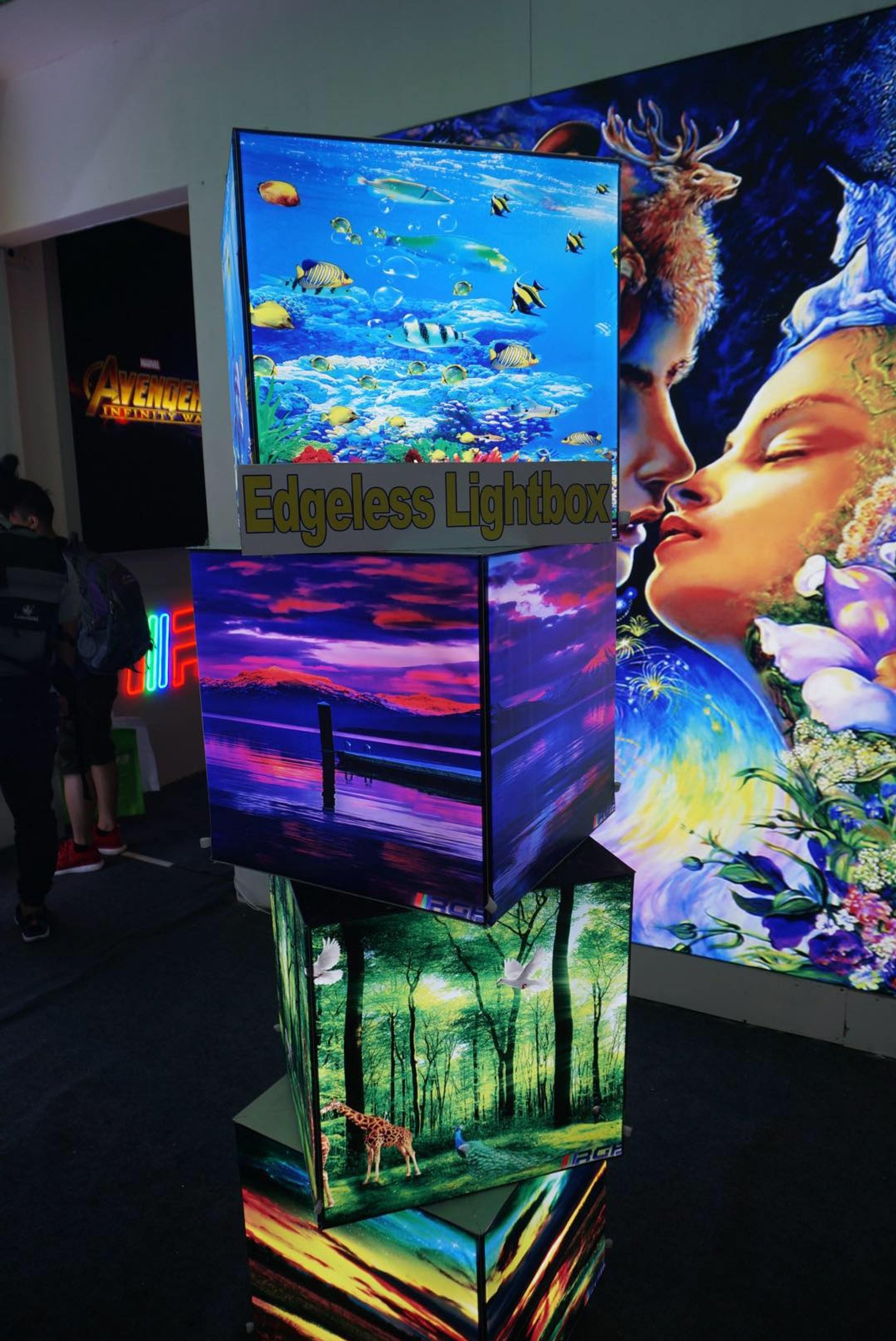
Frameless LED lightboxes use Silicone Edge Graphics (SEG), where fabric graphics are sewn with a silicone beading that tucks neatly into the frame. This creates a seamless, edge-to-edge visual with no visible borders, resulting in a clean, premium look often used for brand displays and feature walls.
Ceiling Lightbox
Ceiling LED lightboxes are installed overhead and are commonly used in malls, offices, showrooms, and commercial spaces. They provide bright, evenly lit visuals while enhancing the overall atmosphere of the space.
Standee Lightbox
Standee LED lightboxes are freestanding displays that are easy to position and relocate. They are commonly used for promotions, events, product launches, and point-of-sale displays where flexibility and visibility are important.
Outdoor Lightbox
Outdoor LED lightboxes are built with weather-resistant materials to withstand rain, heat, and dust. These are suitable for outdoor advertising, storefronts, and signage in high-traffic public areas.
Dynamic / Programmable Lightbox
Dynamic LED lightboxes feature programmable lighting effects that can create animated or changing visual displays. These are often used for eye-catching installations where motion and visual impact are key.
LED Lightbox vs Traditional Lightbox
Traditional lightboxes typically use fluorescent tubes as their light source. While effective in the past, these systems often produce uneven lighting, visible hot spots, and higher power consumption. Fluorescent lights also require more frequent maintenance and replacement over time.
LED lightboxes, on the other hand, use modern LED technology that delivers brighter, more even illumination across the entire graphic. Colors appear more vibrant and consistent, making visuals sharper and more eye-catching. LEDs are also significantly more energy-efficient, longer-lasting, and generate less heat.
In terms of design, LED lightboxes allow for slimmer profiles, cleaner finishes, and more flexible installation options compared to traditional lightboxes. This makes them better suited for modern retail environments, exhibitions, and branded spaces where aesthetics and performance matter.
Overall, LED lightboxes offer better visual quality, lower operating costs, and longer lifespan—making them a smarter long-term investment than traditional lightbox systems.
Where Are LED Lightboxes Commonly Used?
LED lightboxes are widely used across different industries because of their versatility, brightness, and clean presentation. They are suitable for both short-term promotions and permanent installations. LED lightboxes are commonly used in retail and mall environments, where visibility and consistent branding are essential.
Common applications include:
Retail stores – for product highlights, window displays, menus, and in-store promotions
Shopping malls – used in storefronts, directories, hallways, and feature walls
Exhibitions and trade shows – to attract attention and clearly showcase branding or key visuals
Offices and corporate spaces – for lobby signage, branding walls, and directional displays
Restaurants and cafés – commonly used for menu boards, promotional graphics, and interior décor
Events and product launches – as eye-catching visual backdrops or freestanding displays
Outdoor and public spaces – for illuminated signage in high-traffic areas, depending on the lightbox type
Because LED lightboxes come in different formats and mounting options, they can be adapted to suit a wide range of environments and design requirements.
Choosing the Right LED Lightbox
Selecting the right LED lightbox depends on where it will be used, how often the graphics will change, and the overall look you want to achieve.
Before choosing a lightbox, consider the following factors:
Location – Determine whether the lightbox will be used indoors or outdoors, as this affects the materials and protection needed.
Installation type – Decide if the lightbox will be wall-mounted, ceiling-mounted, freestanding, or built into a display.
Graphic updates – If visuals need to be changed frequently, snap-open or magnetic lightboxes offer quicker and easier replacement.
Display style – Frameless or SEG lightboxes create a seamless, premium look, while framed options provide a more structured appearance.
Size and visibility – The dimensions of the lightbox should match viewing distance and available space to ensure maximum impact.
Choosing the right LED lightbox ensures better visual performance, longer lifespan, and a display solution that fits both functional and design requirements. Before planning a project, it’s also important to understand LED lightbox pricing and the factors that affect overall cost.
LED Lightbox Solutions by Rich Graphix
At Rich Graphix, we design and fabricate LED lightbox solutions that balance visual impact, durability, and ease of use. Our lightboxes are built using quality materials and modern LED technology to ensure consistent illumination and long-lasting performance.
We offer a wide range of LED lightbox formats—including slim, magnetic, frameless (SEG), ceiling-mounted, freestanding, outdoor, and programmable options—to suit different spaces and display requirements. Each solution can be customized based on size, installation method, and graphic style.
Whether you are planning a retail display, exhibition setup, or long-term commercial signage, our team can help recommend the right LED lightbox solution for your project.
Looking for LED Lightbox Solutions?
If you’re planning a retail display, exhibition setup, or commercial signage, explore our LED lightbox systems designed for real-world applications.
👉 View LED Lightbox Products
https://www.richgraphix.com.ph/products/led-lightbox